
Understanding Brake Noise: When Squealing Means Brake Service and Inspection in The Valley, New Mexico
Albuquerque, United States - March 23, 2026 / Mango Automotive /
The Valley, NM – Vehicle brake noises serve as critical early warning indicators for component wear and potential safety issues affecting stopping performance. Recent data from the National Highway Traffic Safety Administration reveals that approximately 22% of vehicle crashes attributed to mechanical failure involve brake system problems, emphasizing the importance of recognizing auditory warning signs before they escalate into dangerous situations.
High-pitched squealing and metal-on-metal grinding sounds represent the most common brake noise complaints drivers experience. Mango Automotive (The Valley) technicians regularly diagnose these sounds, which typically correlate to specific stages of brake component wear, with each distinct noise pattern indicating different levels of urgency for professional evaluation.
Understanding Brake Noise Types and Desert Climate Impact on Components
Brake systems produce several distinct sounds that signal different component conditions:
Primary Brake Noise Categories:
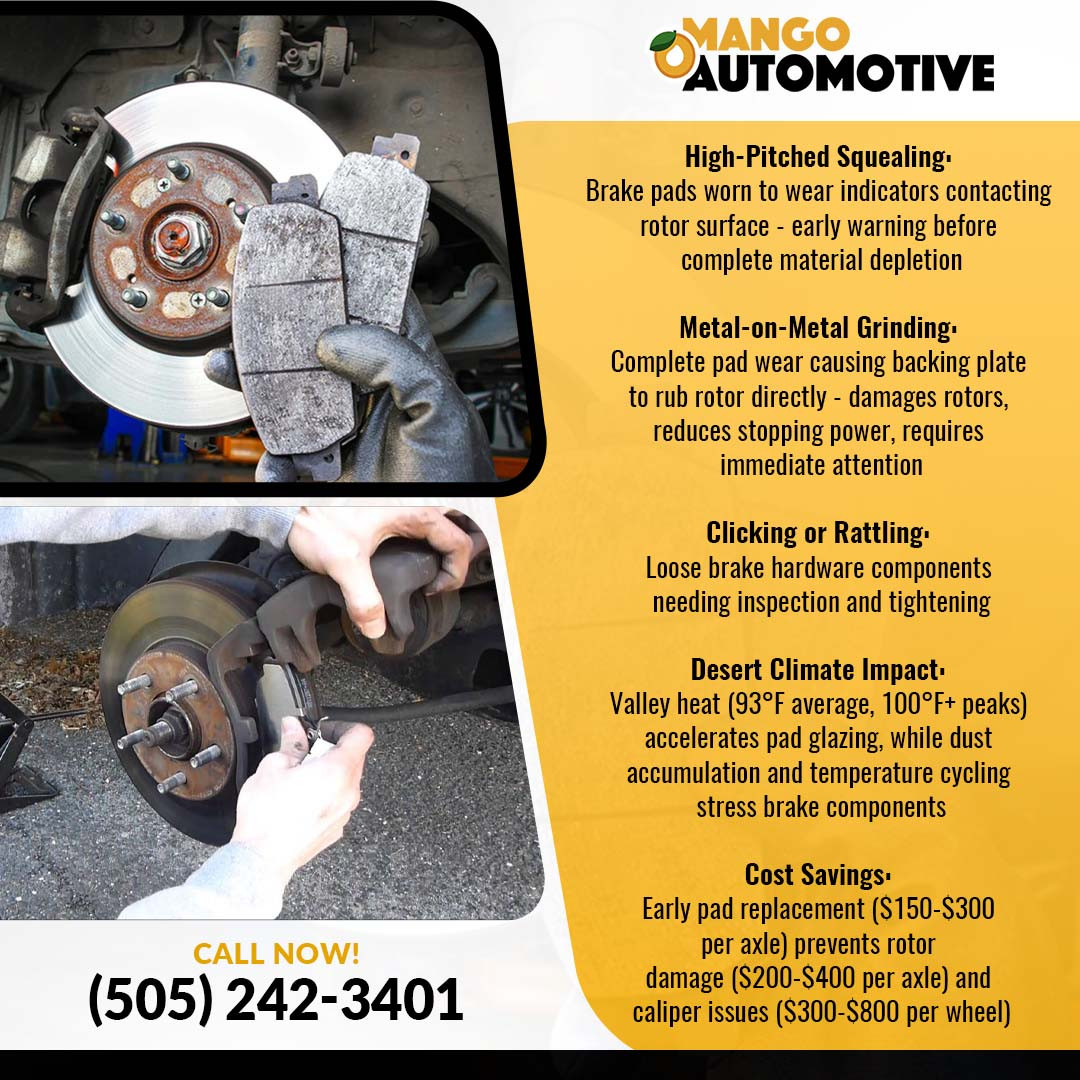
High-pitched squealing from the wear indicator contact with the rotors
Metal-on-metal grinding indicates complete pad material loss
Clicking or rattling from loose brake hardware components
Continuous rubbing sounds suggest stuck calipers or debris
High-pitched squealing typically occurs when brake pads wear down to the point where built-in wear indicators contact the rotor surface. These small metal tabs are specifically designed to create noise as an early warning system before the pad material becomes completely depleted.
Metal-on-metal grinding represents a more serious condition where the pad material has worn away completely, causing the metal backing plate to rub directly against the rotor. This situation damages rotors while simultaneously reducing stopping power and increasing stopping distances.
Climate and Driving Conditions Affecting Brake Performance
The Valley's desert environment creates specific challenges for brake system components. According to Weather Spark climate data, summer temperatures in Albuquerque typically reach 93°F, with the hottest months seeing temperatures exceeding 100°F. Pavement temperatures rise significantly higher than air temperatures during peak afternoon hours.
Temperature Effects on Brake Components:
Temperature Condition | Impact on the Brake System |
Extreme heat exposure | Accelerates brake pad glazing and hardening |
Rapid temperature changes | Causes thermal stress on rotors |
Low humidity | Increases dust accumulation on components |
Temperature cycling | Affects brake fluid moisture absorption |
Stop-and-go traffic patterns along major urban corridors create frequent braking scenarios that accelerate pad wear. Urban driving involves considerably more brake applications per mile compared to highway driving, leading to faster component degradation.
Different brake pad materials produce varying levels of noise during operation. Ceramic pads offer quieter operation but may produce occasional squealing in cold weather. Semi-metallic pads are more prone to noise yet offer excellent stopping power. Organic pads provide the quietest operation but wear faster under high-heat conditions.
When to Seek Professional Brake Service and Inspection in The Valley, NM
Brake noises warrant professional evaluation because auditory symptoms do not always reveal the complete condition of brake system components. Comprehensive brake inspections examine multiple system elements beyond simple visual assessment.
Multi-Point Brake Inspection Elements:
Brake pad thickness measurements on all four wheels
Rotor condition assessment for scoring, warping, or excessive wear
Caliper function testing for proper piston operation
Brake fluid quality evaluation for contamination and moisture content
Hardware condition inspection of clips, springs, and mounting bolts
Brake line integrity examination for leaks or damage
Professional brake evaluation includes precision measurements using specialized tools. Technicians measure rotor thickness with micrometers, test brake fluid boiling points, check caliper slide pin movement, and verify proper brake balance between all four wheels.
Brake components have specific minimum thickness requirements established by manufacturers. Most brake pads require replacement when reaching 3-4mm thickness, though specifications vary by vehicle. Rotors feature minimum thickness specifications stamped on their surface, and operating below these thresholds compromises vehicle safety.
Critical Warning Signs Requiring Immediate Attention
Certain brake symptoms indicate drivers should seek auto repair in The Valley, NM, immediately rather than delaying service.
Metal-on-metal grinding sounds mean brake pads have completely worn through their friction material. Continuing to drive damages rotors increases stopping distances and creates serious safety risks. This condition requires immediate attention from a car mechanic in The Valley, NM.
Brake pedal changes signal serious system issues. A soft, spongy pedal sinking toward the floor indicates air in brake lines or fluid leaks. A hard pedal requiring excessive force suggests problems with the brake booster or vacuum system.
According to Insurance Institute for Highway Safety research, approximately one-third of all police-reported crashes in the United States are rear-end collisions. Stop-and-go traffic conditions common in urban areas increase the frequency of these incidents, making properly functioning brakes critical for preventing crashes.
Vibration or pulsing in the brake pedal indicates warped rotors from excessive heat. A vehicle pulling to one side during braking suggests uneven brake system function from stuck calipers, collapsed hoses, or contaminated pads. Dashboard brake warning lights illuminate for low fluid levels, parking brake engagement, or ABS problems requiring immediate diagnosis.
Preventive Maintenance and Cost Considerations
Proactive brake care prevents expensive repairs while maintaining vehicle safety. Regular service intervals depend on driving conditions and vehicle usage patterns.
Recommended Brake Service Schedule:
Brake inspection every 12,000 miles or annually
Brake fluid replacement every 24,000-36,000 miles or every 2-3 years
Brake pad replacement every 25,000-70,000 miles, depending on driving habits
Rotor service evaluation at each pad replacement
Brake Service Cost Comparison:
Service Type | Approximate Cost Range | Services Included |
Routine brake inspection | Complimentary-$50 | Visual check, measurements, test drive |
Brake pad replacement | $150-$300 per axle | New pads, hardware, labor |
Rotor resurfacing | $75-$150 per axle | Machining existing rotors |
Rotor replacement | $200-$400 per axle | New rotors, installation |
Caliper replacement | $300-$800 per wheel | New caliper, bleeding, labor |
Early detection of pad wear allows rotor resurfacing rather than replacement, saving $100-$250 per axle. Waiting until metal-on-metal grinding occurs often requires complete rotor replacement plus potential caliper damage repair.
Mango Automotive (The Valley) backs brake services with comprehensive warranty coverage: 60 months/60,000 miles total coverage, including 36 months/36,000 miles nationwide plus an additional 24 months/24,000 miles exclusively at Mango Automotive locations.
Take Action on Brake Noise Today: Call Mango Automotive (The Valley)

Vehicle brake noises serve as early warning systems that should not be ignored. Unusual sounds during brake application indicate component wear requiring professional evaluation. Mango Automotive (The Valley) provides full brake system diagnostics and repair services for drivers experiencing squealing, grinding, or other brake-related sounds.
Professional brake service and inspection in The Valley, NM, ensures vehicle safety through thorough multi-point inspections and precision measurements. Experienced technicians diagnose brake issues accurately and recommend appropriate solutions based on component condition and safety requirements.
Drivers experiencing brake noises can schedule complete brake service and inspection in Albuquerque, NM by contacting Mango Automotive (The Valley) at (505) 242-3401. The facility offers same-day service for most brake repairs, comfortable waiting areas with high-speed WiFi, and complimentary shuttle service within 3 miles. Professional brake evaluation backed by industry-leading warranty coverage ensures vehicle safety and driver confidence on local roads.

Contact Information:
Mango Automotive
301 Griegos Rd NW
Albuquerque, NM 87107
United States
Jesse Jackson
https://www.mangoautomotive.com/


Original Source: https://www.mangoautomotive.com/understanding-brake-noise-when-squealing-means-brake-service-and-inspection-in-the-valley-new-mexico
